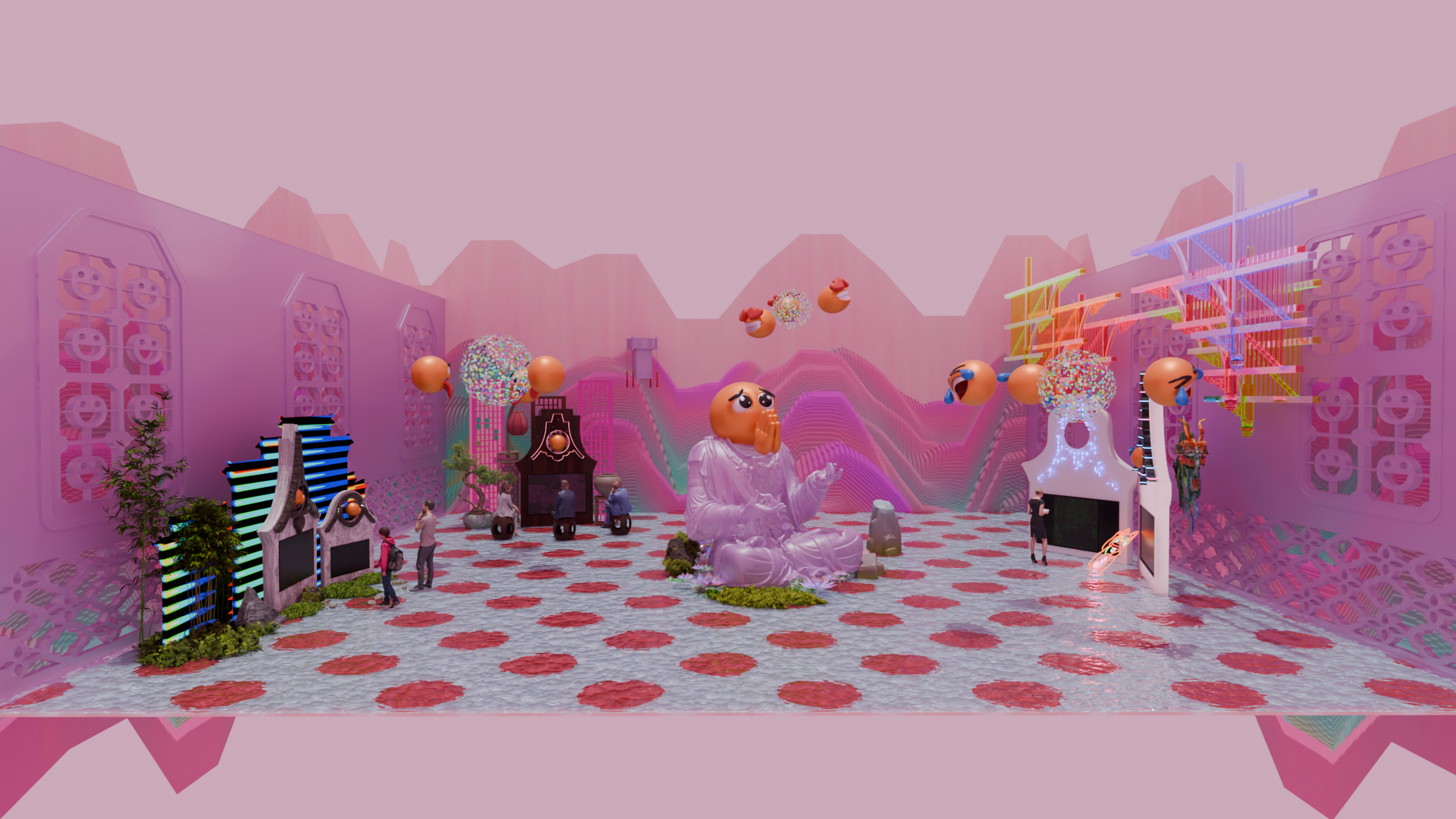
Pink installation scene with a central emoji-headed sculpture and surrounding screens

AICG / MOVING IMAGE

THE MEMORY FORGERS

SCROLL TO EXPLORE ↓

OVERVIEW

When images can be generated, rewritten and replayed, who decides which memories become real?

The Memory Forgers is presented as an audiovisual fiction about manufactured recollection. A vintage television becomes the viewing device for unstable figures and reconstructed histories, connecting synthetic imagery with the authority of archival media.

ROLE
ARTIST / DESIGNER
TOOLS / MEDIA
AICG
MOVING IMAGE
SCREEN INSTALLATION
TYPE
AUDIOVISUAL FICTION
FOCUS
MEMORY
AUTHENTICITY

PROJECT FILM

MEMORY IN MOTION

The companion film presents The Memory Forgers in motion.

PROJECT FILMWATCH ON YOUTUBE ↗

Background, Research and Interviews

Background Interview Research The entertainmentalization of culture challenges teachers to disseminate knowledge, as students' classroom responses may be influenced by entertainment. Teacher Interview Analysis Name: Yang Feng BoWei Liu Name: Age: 50 26 Age: Designer Transforming a familiar IP into entertainment boosts the appeal, engagement, and user experience of design works. Through interviews with two professionals, I found that while entertainment can contribute to knowledge, respondents oppose vulgarizing educational and historical content for entertainment. Entertainment blinds people, creating an unrealistic world that distorts reality and leads to incorrect mappings. Culture is being replaced by entertainment, reducing people to passive spectators who no longer think critically. Theodor Adorno: Mass culture's entertainment paralyzes critical thinking. Entertaining history might cause loss of critical reflection. Paul Ricoeur: Memory is subjective, history is objective. Entertainment history can overlook its objectivity and science. How does entertainment affect your work? What is entertaining? Historical stories are adapted into folk art to make history more interesting and accessible. Nowadays, historical events and figures are turned into entertainment and spread through short videos. More games are recreating historical figures for entertainment and spreading them. Readers want to believe historical fiction rather than historical biographies. 1 2 3 4 Research of historical entertainment.

Ideation and Interactive Process

Ideation Interactive Process Source of inspiration. Interactive assumptions about the audience. Manchu Window Installation Art The inspiration comes from the eaves and window grilles of traditional Chinese architecture. It combines entertainment symbols with Chinese tradition and is presented as installation art. This image shows part of the space and a video on the wall. The audience walks into the screen, and the screen plays a random image. A small monitor in the corner shows the original video. Chinese Stage Horsehead Wall EMOJI Different monitors play various entertainment videos.

Production Process

Production process TD production process. 3D scene model making process. Inspired by Chinese landscape painting, Manchurian Windows and kaleidoscopes. Use visual effects in TouchDesigner to reconstruct historical events and imagine the results of entertaining historical narratives. Kaleidoscope Manchurian Windows Chinese paintings Preliminary Sketch Scene model making process. Model Detail Model Detail Other Perspectives

Final Scene and Installation Views

Production process